Wild Things
Year
2026
Type
Solo Exhibition
Title
Wild Things
Categories
Photography, Video, Installation
Location
Cuchifritos Gallery, New York City, NY
Medium
HD and SD videos, photography, installation
Read the Artforum review here.
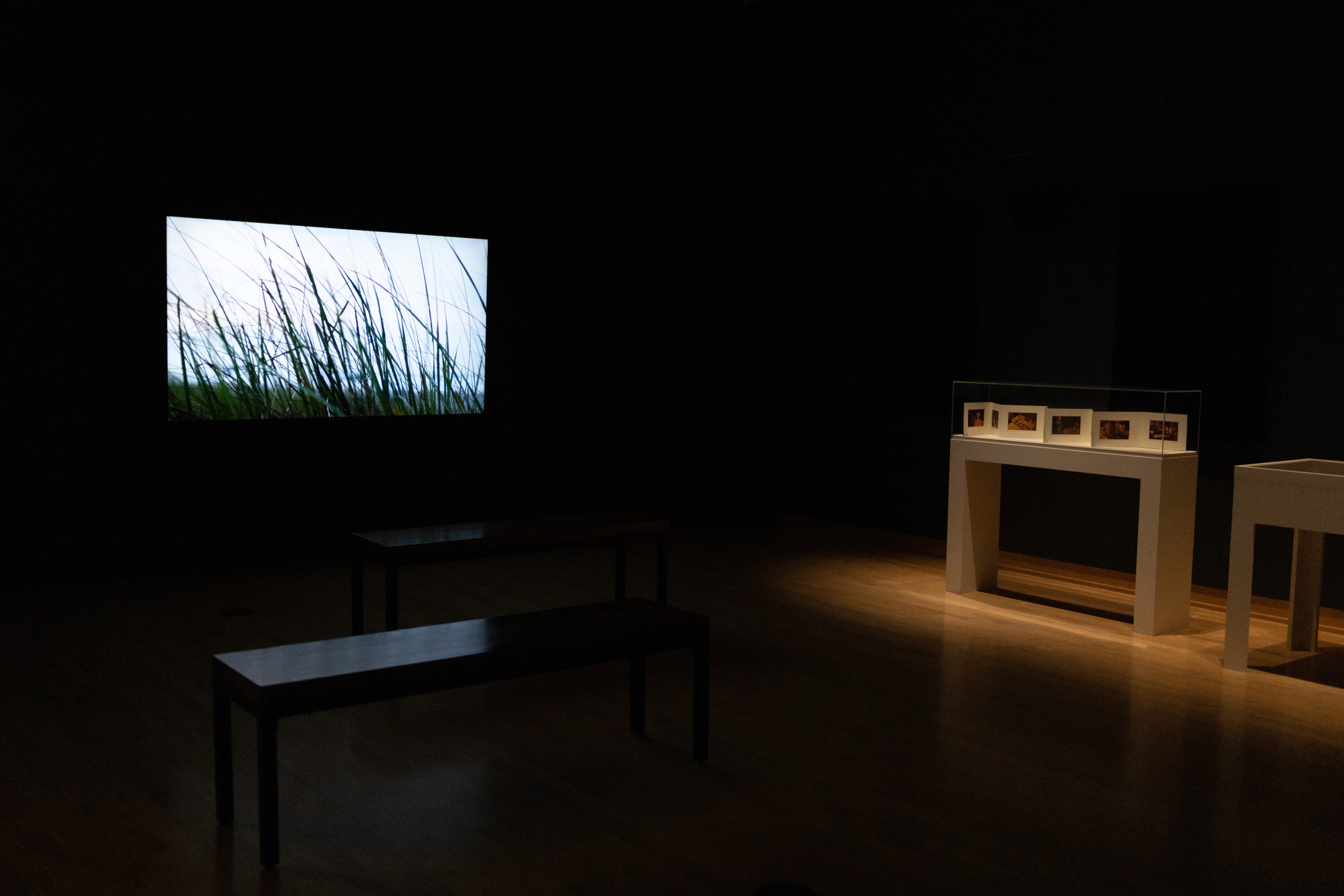
Cuchifritos Gallery is pleased to present Wild Things, a solo exhibition with AAI’s LES Studio Program alum Sunny Leerasanthanah, on view June 26 – September 19, 2026. The exhibition connects early 20th-century dioramas from the American Museum of Natural History in New York to the modern-day state-sanctioned hunt of invasive Burmese pythons in the Florida Everglades. Examining these settings as ideological stages of American myth-making—one where, paradoxically, hunting and killing are encouraged in the name of conservation—expresses the determinants of what is considered natural or worth preserving within the American lexicon and landscape.
Wild Things continues Leerasanthanah’s multi-year body of work exploring how the regulation of “unwanted” bodies within U.S. invasive species policy mirrors forms of exclusion, control, and containment concerning those marginalized, encompassing race, ability, sexuality, gender, class, and immigration status. Researching Theodore Roosevelt, often seen as ‘the father of the American conservation movement’ and an influential figure in the making of the American Museum of Natural History, as well as the practice of hunting and its significance in the formation of the “male” American identity, the works in this exhibition reckon with notions of manhood and identity formation from the individual to the State.
The project follows a throughline from the founding of the American Museum of Natural History, amid an influx of immigration to America in the late 1800s, to figures involved in the eugenics movement, narratives of a “natural world order”, to current invasive species policy, government sponsored hunting initiatives, and violent enforcement/elimination of “unwanted” people with the desire and action to return to an imagined past.
Drawing from the writings of Donna Haraway, historic access to the wild/outdoors is framed as a response to the influx of immigration after 1890, along with a longing to return to an “old imagined hygienic, pre-industrial America.” Haraway writes in her 1984 text, Teddy Bear Patriarchy: “From about 1890 to the 1930s, the [American Museum of Natural History] was a vast public education and research program for producing experience potent to induce the state of manhood,” and “the true man is the true sportsman.” She notes the longing of men like Roosevelt, introducing the wilderness as a place where this was possible. This claim also holds a destructive contradiction, as the founding of more National Parks at the turn of the 20th century also perpetuated the continuation of the devastating forced removal of Indigenous communities from their lands.
Using imagery of enclosures, dioramas, landscape, camouflage, and the medium of the camera, Leerasanthanah mirrors, exposes, and challenges these worldviews through recreation and a loose autoethnographic framework. Informed by the artist’s experience navigating U.S. immigration policy as an “alien resident”, they express feeling a closer affinity to the Burmese python, which, in Leerasanthanah’s home country of Thailand, is an endangered and protected species, in contrast to its status in the U.S.
Read the Artforum review here.
Cuchifritos Gallery is pleased to present Wild Things, a solo exhibition with AAI’s LES Studio Program alum Sunny Leerasanthanah, on view June 26 – September 19, 2026. The exhibition connects early 20th-century dioramas from the American Museum of Natural History in New York to the modern-day state-sanctioned hunt of invasive Burmese pythons in the Florida Everglades. Examining these settings as ideological stages of American myth-making—one where, paradoxically, hunting and killing are encouraged in the name of conservation—expresses the determinants of what is considered natural or worth preserving within the American lexicon and landscape.
Wild Things continues Leerasanthanah’s multi-year body of work exploring how the regulation of “unwanted” bodies within U.S. invasive species policy mirrors forms of exclusion, control, and containment concerning those marginalized, encompassing race, ability, sexuality, gender, class, and immigration status. Researching Theodore Roosevelt, often seen as ‘the father of the American conservation movement’ and an influential figure in the making of the American Museum of Natural History, as well as the practice of hunting and its significance in the formation of the “male” American identity, the works in this exhibition reckon with notions of manhood and identity formation from the individual to the State.
The project follows a throughline from the founding of the American Museum of Natural History, amid an influx of immigration to America in the late 1800s, to figures involved in the eugenics movement, narratives of a “natural world order”, to current invasive species policy, government sponsored hunting initiatives, and violent enforcement/elimination of “unwanted” people with the desire and action to return to an imagined past.
Drawing from the writings of Donna Haraway, historic access to the wild/outdoors is framed as a response to the influx of immigration after 1890, along with a longing to return to an “old imagined hygienic, pre-industrial America.” Haraway writes in her 1984 text, Teddy Bear Patriarchy: “From about 1890 to the 1930s, the [American Museum of Natural History] was a vast public education and research program for producing experience potent to induce the state of manhood,” and “the true man is the true sportsman.” She notes the longing of men like Roosevelt, introducing the wilderness as a place where this was possible. This claim also holds a destructive contradiction, as the founding of more National Parks at the turn of the 20th century also perpetuated the continuation of the devastating forced removal of Indigenous communities from their lands.
Using imagery of enclosures, dioramas, landscape, camouflage, and the medium of the camera, Leerasanthanah mirrors, exposes, and challenges these worldviews through recreation and a loose autoethnographic framework. Informed by the artist’s experience navigating U.S. immigration policy as an “alien resident”, they express feeling a closer affinity to the Burmese python, which, in Leerasanthanah’s home country of Thailand, is an endangered and protected species, in contrast to its status in the U.S.


Read the Artforum review here.
Cuchifritos Gallery is pleased to present Wild Things, a solo exhibition with AAI’s LES Studio Program alum Sunny Leerasanthanah, on view June 26 – September 19, 2026. The exhibition connects early 20th-century dioramas from the American Museum of Natural History in New York to the modern-day state-sanctioned hunt of invasive Burmese pythons in the Florida Everglades. Examining these settings as ideological stages of American myth-making—one where, paradoxically, hunting and killing are encouraged in the name of conservation—expresses the determinants of what is considered natural or worth preserving within the American lexicon and landscape.
Wild Things continues Leerasanthanah’s multi-year body of work exploring how the regulation of “unwanted” bodies within U.S. invasive species policy mirrors forms of exclusion, control, and containment concerning those marginalized, encompassing race, ability, sexuality, gender, class, and immigration status. Researching Theodore Roosevelt, often seen as ‘the father of the American conservation movement’ and an influential figure in the making of the American Museum of Natural History, as well as the practice of hunting and its significance in the formation of the “male” American identity, the works in this exhibition reckon with notions of manhood and identity formation from the individual to the State.
The project follows a throughline from the founding of the American Museum of Natural History, amid an influx of immigration to America in the late 1800s, to figures involved in the eugenics movement, narratives of a “natural world order”, to current invasive species policy, government sponsored hunting initiatives, and violent enforcement/elimination of “unwanted” people with the desire and action to return to an imagined past.
Drawing from the writings of Donna Haraway, historic access to the wild/outdoors is framed as a response to the influx of immigration after 1890, along with a longing to return to an “old imagined hygienic, pre-industrial America.” Haraway writes in her 1984 text, Teddy Bear Patriarchy: “From about 1890 to the 1930s, the [American Museum of Natural History] was a vast public education and research program for producing experience potent to induce the state of manhood,” and “the true man is the true sportsman.” She notes the longing of men like Roosevelt, introducing the wilderness as a place where this was possible. This claim also holds a destructive contradiction, as the founding of more National Parks at the turn of the 20th century also perpetuated the continuation of the devastating forced removal of Indigenous communities from their lands.
Using imagery of enclosures, dioramas, landscape, camouflage, and the medium of the camera, Leerasanthanah mirrors, exposes, and challenges these worldviews through recreation and a loose autoethnographic framework. Informed by the artist’s experience navigating U.S. immigration policy as an “alien resident”, they express feeling a closer affinity to the Burmese python, which, in Leerasanthanah’s home country of Thailand, is an endangered and protected species, in contrast to its status in the U.S.
Read the Artforum review here.
Cuchifritos Gallery is pleased to present Wild Things, a solo exhibition with AAI’s LES Studio Program alum Sunny Leerasanthanah, on view June 26 – September 19, 2026. The exhibition connects early 20th-century dioramas from the American Museum of Natural History in New York to the modern-day state-sanctioned hunt of invasive Burmese pythons in the Florida Everglades. Examining these settings as ideological stages of American myth-making—one where, paradoxically, hunting and killing are encouraged in the name of conservation—expresses the determinants of what is considered natural or worth preserving within the American lexicon and landscape.
Wild Things continues Leerasanthanah’s multi-year body of work exploring how the regulation of “unwanted” bodies within U.S. invasive species policy mirrors forms of exclusion, control, and containment concerning those marginalized, encompassing race, ability, sexuality, gender, class, and immigration status. Researching Theodore Roosevelt, often seen as ‘the father of the American conservation movement’ and an influential figure in the making of the American Museum of Natural History, as well as the practice of hunting and its significance in the formation of the “male” American identity, the works in this exhibition reckon with notions of manhood and identity formation from the individual to the State.
The project follows a throughline from the founding of the American Museum of Natural History, amid an influx of immigration to America in the late 1800s, to figures involved in the eugenics movement, narratives of a “natural world order”, to current invasive species policy, government sponsored hunting initiatives, and violent enforcement/elimination of “unwanted” people with the desire and action to return to an imagined past.
Drawing from the writings of Donna Haraway, historic access to the wild/outdoors is framed as a response to the influx of immigration after 1890, along with a longing to return to an “old imagined hygienic, pre-industrial America.” Haraway writes in her 1984 text, Teddy Bear Patriarchy: “From about 1890 to the 1930s, the [American Museum of Natural History] was a vast public education and research program for producing experience potent to induce the state of manhood,” and “the true man is the true sportsman.” She notes the longing of men like Roosevelt, introducing the wilderness as a place where this was possible. This claim also holds a destructive contradiction, as the founding of more National Parks at the turn of the 20th century also perpetuated the continuation of the devastating forced removal of Indigenous communities from their lands.
Using imagery of enclosures, dioramas, landscape, camouflage, and the medium of the camera, Leerasanthanah mirrors, exposes, and challenges these worldviews through recreation and a loose autoethnographic framework. Informed by the artist’s experience navigating U.S. immigration policy as an “alien resident”, they express feeling a closer affinity to the Burmese python, which, in Leerasanthanah’s home country of Thailand, is an endangered and protected species, in contrast to its status in the U.S.